My Thoughts on Technology and Jamaica

Friday, July 22, 2016

How Saudi Arabian Solar Desalination and Solar Distillation can compete with Traditional Water

Solar Power may be the answer to our Energy Problems in the Distant future. But can it also be a potential solution to our Water Crisis, a problem faced both locally as well as Worldwide?

According to a Report from the International Food Policy Research Institute 50% of the world population will experience water shortages by 2015, based on increasing water usage due to population increases as pointed out in my blog article entitled “United Nations Population Division says 11.2 billion people by 2100 - Why Africa and India Population exploding as Insect Meat is coming”.
From July 3, 2016
Jamaica, albeit blessed with Wood and Water, gets most of its potable water from Catchment areas near to Rivers. There is currently legislation on the books to introduce Rainwater Harvesting Act as a long-term solution to our ongoing Water Crisis as explained in my blog article entitled “How NWC’s Water Conservation in Drought 2016 means Rainwater Harvesting with Digital Meters”.

Such water would be metered using Digital Water Meters, similar to the Digital Smartmeters being proposed by the JPS Co as noted in my blog article entitled “How JPS Co App for Digital smartmeter means paying Electricity Bill via Mobile Money”.

All of this means that the Water Sector in Jamaica may soon open up to Rainwater Harvesting Contractors and Entrepreneurs and moisture Harvesting from moisture farms in the future as predicted in my blog article entitled “How Rainwater Harvesting Bill means Rainwater Net Billing to end NWC's Water monopoly”.

But what about desalination? Is it possible to use solar power to desalinate Water cheaply enough to be competitive with the NWC?

Solar Desalination - Increasing Efficiencies can make it competitive with Traditional Water Supply

Currently a giant Solar park, the Mohammed bin Rashid Al Maktoum Solar Park, is under construction near the city of Dubai in Saudi Arabia as described in the article “To make Fresh Water without warming the planet, countries Eye Solar Power”, published May 12 2016 by Richard Martin, Technology Review.
From July 3, 2016
This plan will produce a paltry 13,200 gallons of drinking water a day for the workers at the Solar Park. But would a larger Solar Desalination plant make water cheap enough to compete with surface and groundwater?

The Government of Saudi Arabia seems to think so as they have plans for a lager Solar desalination plant located at Al Khafji city in 2017. This plant will produce some 16b million gallons of water, enough to supply the local population.

It's being built jointly by Spanish Solar Company Abengoa and State-owned Saudi company Advanced Water Technology and when completed, may actually be the world’s first large scale solar Desalination plant.

According to a World Bank report, solar-powered desalination is expensive, costing as much as three (3) times water produced by water treatment plants that use Utility power. This may be due in part to the size of the solar array needed to generate the electricity needed to power a traditional reverse-osmosis plant to desalinate water.

However, increasing efficiencies in solar panels and the reduction of prices overall means that the US$50 cost to make 1000 gallons of water may fall to half that level by 2050. The plant expects to benefit initially form subsidies to keep the price down, but that may not be necessary.

Solar Desalination vs Solar Distillation - Concentrated Heat can desalinate Water more efficiently

When one thinks of solar desalination, one thinks of a solar power plant used to power a solar desalinator that use reverse osmosis to extract water from salt water as described in my blog article entitled “How JPS Co uses Aqua Blue-C100 freshwater generator to Desalinate Water for Rockfort Power Station”.

But it does have to be done that way. Instead of solar panels, they can use large solar concentrators to heat the water and flash it to steam then condense the steam to water, without the need for osmosis as described in my blog article entitled “BrightSource Energy Plant Concentrated Solar Rays Killing Birds - Pheromone Traps for Insects a Desert Feast to Keep the Birds Safe”.

This is effectively a large scale Solar Desalinator as described in my Geezam blog article entitled “How to Make Distilled Water using a Solar Desalinator”.

Any volatile chemicals that survive the flashing process can be removed by the addition of chemicals in settling tanks, the use of cyclones to separate them via centrifugation as well as Activated Charcoal Filters and even ozone to purify the water further.

Then the byproducts, mostly magnesium, manganese and calcium salts dissolved in the seawater left over from the solar desalination can be sold as VAP (Value Added Products) making the entire process not only Carbon Neutral but also sustainable.

Solar Desalination is economically feasable. But instead of using Solar Panels to power traditional Reverse Osmosis Equiptment, research should be done in making large scale Solar Distillation Plants that heat water to steam and create pure drinkable water.

This may be the route that Entrepreneurs take in Jamaica to produce Potable Water from Seawater to compete in a deregulated Water Sector!


Thursday, July 21, 2016

How DroneSeed Forest Planting Drones can replace Honeybees as Fruit Tree Pollenators

“There is so much parallel with what happened to precision agriculture and what is happening with us in the forestry industry with drones. We see drones as forestry’s tractor.”

DroneSeed’s CEO Grant Canary speaking to Marketwatch on the use of Drones to replant forests

Commercial UAV (Unmanned Aerial Vehicles) or Drones, have a myriad of applications, most of which benefit mankind. The flying robots in the sky can accomplish a lot give their unique vantage point, making them great for surveillance related jobs.

But add a tool to the drone, and it takes on a whole new level of weirdness.

Oregon start-up DroneSeed achieves this lofty status with their Drone system that uses an airgun to plant trees as explained in the article “Seed­Shooting Drone Could Change How We Manage Forests”, published June 29, 2016 By Kelly Hodgkins, DigitalTrends.

Google Logo

The idea is replace the large teams of people usually involved in replanting a forest in the Pacific Northwest with a fleet of these specialized drones. Started in 2015 by founders Grant Canary and Ryan Mykita, DroneSeed takes the hassle out of tree replanting, as the drones are designed to:

1.      Identify potential planting sites
2.      Drop seed on these planting sites

This is really an example of Robotics being applied to farming similar to Australia as noted in my blog article entitled “How Australia's University of Sydney Livestock Farmbot heralds Efficient Agricultural Towers”.

The similarities are more striking when one considers how hard it is for logging companies to retain workers given the dangers they face and the cost for compensating these workers for these dangers.

It’s also another great example of Robotic Automation.

Drones, which are flying robots, will potentially replace humans in tasks that is repetitive, labour intensive and involves tracking large amounts of information accurately as pointed out in my blog article entitled “Fast Food Robot taking over by 2017 - How Drones like Amazon and PrimeAir and not Humanoid Robots will be the first Robots by 2015”.

The advantages of DroneSeed are clearly obvious:

1.      Drones are more effective and efficient
2.      Drones are cheaper than human labour
3.      Drones prevent humans from being placed in harm’s way

So how does DroneSeed Drones plant trees more efficiently than humans work?

How DroneSeed Drones Work – Drones with Air guns shooting Tree Seeds

Basically, the drones developed by DroneSeed are fitted with a special mini-air gun. However, this is nothing like the traditional air guns used in paintball, as they are lightweight and can shoot the seeds at a speed of 350 feet per second, pushing them deep into the ground.

Google Logo

The drones are also fitted with LIDAR and sonar for 3D Mapping capabilities, making it possible for the drones to spot were the soil is softest and thus ensuring that every seed is planted deep into the soft fertile soil.

But it's their planting prowess that may have not only forestry replanting people impressed but also farmers:

1.      The DroneSeed drone can plant up to 800 seeds in an hour
2.      1.5 hours to replant 1 acre of forest

This is way faster than teams of humans can replant trees, which is typically 800 seeds a day! The founders of drones seed claim that this can potentially reduce the cost of replanting by a factor of 10, as their drones can also provide other services, such as fertilization as well as the application of pesticides for the foresters in the Pacific Northwest. 

They could also be potentially be used by the Forestry Department here in Jamaica to replant trees cut down via illegal logging as reported in my blog article entitled “Why Jamaica Forestry Department's Forest Act needs updating with bigger fines and Drones”.

Drones used for surveillance could be retrofitted with DroneSeed's tech, with minor adjustments to the motors, making it possible to replant and maintain the missing 60% of forests in Jamaica that may be contributing to our declining air quality as argued in my blog article entitled “Jamaican Drought, Trees and Air Quality - Why Jamaican Apartment dwellers are developing Respiratory Ailments”.

But something tells me that DroneSeed isn’t making their tech pure for tree-huggers in Congress to replant trees; they may have loftier goals in mind.

DroneSeed as pollinators - How Drones can be modified to replace bees

I suspect the real application of these drones may potentially be to replace bees and insects for pollination.

Currently bees in the US of A are dying dues to a mysterious disease that causes CCD (Colony Collapse Disorder) as first alluded to in my blog article entitled “Bees Colony Collapse Disorder and the Jamaican opportunity”.

Google Logo

This may be cause by various pathogens and the pathogens behind the AFB (American Foulbrood Disease) may be mites living on bees and their product, prompting Jamaica to ban the importation of bee products from the US of A as noted in my blog article entitled “Jamaican Honeybees and American FoulBrood Disease - How the Ministry of Agriculture ban on Imported Honey protects local Agriculture Industry”.

The drones developed by DroneSeed can be made much smaller have a special robotic arm designed for pollinating flowers. So instead of shooting seeds, it can instead flit around like a bee and pollinate flower for fruit plants in a manner similar to a bee.

The advantages are the same as with replanting trees, as these drones can even be made to be solar powered, use Hydrogen fuel cells or even powered by mini rotary engines as described in my blog article entitled “How LiquidPiston's X Mini Wankel Engine means Rotary Engines for Drones, Range Extender and Hydrogen Vehicles”, keeping them aloft for hours at a time.

This would make them more effect at not only planting plants but also pollinating flowers than bees. DroneSeed’s Tech could be a potential long-term solution to fruit production in the US of A, as bees are needed to pollinate fruit trees.

Combined with Agricultural Towers as described in my blog article entitled “How IGES Canada Ltd Vertical Hydroponic Aquaponic Towers make low cost Organic foods”, DroneSeed’s technology can potentially be used to grow fruit trees inside of vertical Greenhouses as high as skyscrapers.

Thus the drones developed by DroneSeed are not just a solution to de-forestation. They may be a solution to the coming Global Food Crisis as they can replace the Earth's oldest pollinators: bees. 


Tuesday, July 19, 2016

How to recover Digicel and FLOW Jamaica Credit on faded Thermal Receipts

I’m sure many Jamaicans have had this problem with purchasing voucher credit from Digicel or FLOW; reading their paper based voucher credit.

This as the paper voucher credit is printed using a thermal printer. Thermal paper is just regular paper made with some chemicals that reacts with heat, turning black to form words and images on the paper.

This is an advantage to companies that print receipts, as they will fade with time, going back to the white color of the paper.  However, this isn’t exactly true! You can actual restore the images and word via various techniques that do the following:

1.      Restore the images and words back to their original black colour
2.      Reduce or increase the whiteness of the paper

Thus, using these techniques, any information written on a Thermal paper can be revealed. So how do we do this?

Restore the images and words - Heat treatments methods that restore Thermal Paper

You can reveal the images and words on a thermal paper by the re-application of heat via various methods.

One method involves the use of a laminator or document scanner. These devices use high intensity light to scan documents and the heat of the light will increase the visibility of the images and words. Additionally the scan generated will expose what was written on the printed thermal paper receipt.

Equally, if you have a high intensity UV Lamp, similar to those used in sauna rooms, you can lay the paper under a flat sheet of transparent glass sheet for about 15 minutes to achieve the same results. In this case, you're also heating the paper with high intensity UV Radiation, making the images and words visible again.

Even better, if you do not have a UV lamp, you can use a very clean dry electric iron or a hairdryer. Lay the Thermal paper with the writing side facing down and run the iron quickly over the thermal paper. The chemicals will react with the direct conducted heat from the clean dry electric iron, making the image or words visible once more.

Reduce or increase the whiteness of the paper - Digital Software and Photocopier to restore Receipts

If you have a desktop scanner handy, you can scan the thermal printed receipts that are faded.

Then using software such as Photoshop, which is also great for removing background in images used in making e-book covers a described in my MICO Wars blog article entitled “How to remove Image Backgrounds to make an e-book cover”, you can use the Effect editor to work out the resolution of the colour and enhance it in order to make the images and words visible again.


Another technique that a little quicker is to simply use a black and white photocopier! Set it to the blackest possible level the contrast as sharp as possible and then photocopy the thermal receipt.

The process will copy the receipt and produce a high resolution image that increases the printed images and letters on the receipt, making them visible again.

Thermal paper Glows in the Dark - Photographer's technique to read Receipts

This next method is often use by the Jamaican Police to reveal information written on thermally printed receipts or anything written in indelible ink e.g. lime juice, urine or blood; exposure to UV (Ultravoilet) radiation.

This is the same light that reveals blood, duster fingerprints and glow-in-the-dark Jamaican Toto as described in my blog article entitled “How to make Glow-in-the-Dark Jamaica Cassava Toto”.  

Most of these substances actually glow under UV, so the technique involves exposing the receipt to UV rays in a dark room. When you turn on the UV lamp and then turn it off after about 1 minute, you'll notice that the images and words on the thermally printed receipt glow in the dark. Use a non flash High resolution Digital camera to take a picture of the receipt while in the Dark room.

In so doing, you would have exposed, pun intended, the information on the Digicel or FLOW Jamaica voucher receipt and reclaim your Credit which was lost!


How Xiaomi's US$200 Mi Notebook is a Linux Ubuntu Laptop for Christmas 2016


Xiaomi has announced a Launch Event to take place on Wednesday July 27th 2016 to be held at their China National Convention Center in Beijing as reported in “Xiaomi schedules July 27 event, Redmi Note 4 and a laptop likely to be outed”, published 15 July, 2016 by Vlad, GSMArena.

Scope out the Invitation as shown below as it may be time for you to practice reading Mandarin!


So what new products does Xiaomi plan to reveal that'll dazzle the world into buying more of their high-quality low-cost products?

Xiaomi to debut the Mi Notebook - US$200 Laptop for the masses in Christmas 2016

Clues appearing online suggest that these new products may be the following:

1.      Redmi Note 4 with rear dual­camera
2.      Helio X20 SoC
3.      Mi Notebook

That last product, the Mi Notebook, is one that I've predicted in my MICO Wars blog article entitled “US$199 Xiaomi Linux-based Laptops coming in 2016”. The Mi Notebook may come in the following sizes:

1.      12.5"
2.      13.3"
3.      15.6"

The Mi Notebook will most likely be powered by Linux, possibly Ubuntu or Fedora remodelled to have the same interface like either Apple Mac OS or Windows 10. The OS may even be able to read files made to run on those platforms.

It may even be designed with aluminium and even look like the Apple Macbook Air or Pro but be transformable like an Asus Transformer, going from Tablet to Laptop with ease.

But the pricing may be the shocker, as I’m expecting it to be priced below $200, cheaper than Google Chromebooks. If this is true, then the Mi Notebook will be a Laptop for the masses in Christmas 2016.

Monday, July 18, 2016

How Imperial College London Study reveals Zika Virus Infection ending in 3 years thanks to Rio Olympics 2016

“The current explosive epidemic will burn itself out due to a phenomenon called herd immunity. Because the virus is unable to infect the same person twice -- thanks to the immune system generating antibodies to kill it -- the epidemic reaches a stage where there are too few people left to infect for transmission to be sustained”

Professor at Imperial's School of Public Health, Dr. Neil Ferguson, commenting on the spread of the Zika Virus

Zika Virus sufferers in Jamaica don't have much to rejoice about these days! For one, it's spreading rapidly across the island unchecked as the symptoms are so mild as to be unnoticeable.

Now comes word from the Imperial College London that the infected will end in the next three (3) years as reported in “Zika epidemic should fizzle out within 3 years: study”, published Thursday, July 14, 2016, The Jamaica Observer. 

Google Logo

According to the scientists, in a study published in the US Journal Science, Globalization will make the disease spread rapidly. However, thanks to the fact that the infected rapidly develope immunities to the Zika Virus, the virus will soon run out of people to infect, a phenomenon known as herd immunity.

Eventually, the rate of infection will burn itself out in three (3) years tops. Even more interestingly, even if the Zika Virus mutates, thanks to this herd immunity, it'll be a decade before it can infect anyone at this global level again.

Mosquito control a bad idea, says Imperial College London – Increases chances of Zika Virus Mutations

Even more interesting are the study’s observation on mosquito control methods such as my crazy idea for a super-sized Carbon Dioxide Generator Mosquito Trap as explained in my blog article entitled “How to kill Zika and Yellow Fever mosquitoes using a Carbon Dioxide Generator Mosquito Trap”.
                               
According to the scientists at the Imperial College London, any such mosquito control method, even using natural chemicals such as Garden croton, Tawa-tawa and Lemon grass as described in my blog article entitled “How Garden croton, Tawa-tawa and Lemon grass can be used to kill Aedes Aegypti Mosquito Larvae” will help to prolong the Zika Virus spread, as they might promote mutations.

Worse, the vaccine might be pointless; by the time it passes clinical trials, thanks to herd immunity, there may not be anybody with the love virus in them in the next three (3) years even test the vaccine on, as we'll all have immunities, to quote Professor at Imperial's School of Public Health, Dr. Neil Ferguson: “If our projections are correct, cases will have dropped substantially by the end of next year, if not sooner. This means by the time we have vaccines ready to be tested, there may not be enough cases of Zika in the community to test if the vaccine works”.

CDC says Zika Virus Spread Low-risk – No pregnancies for three years will lower populations

This it makes sense that the CDC (Center for Disease Control) see the risk of a massive Zika Virus spread during the Rio Olympics 2016 as a low risk occurrence, as the rapid global spread may actual hasten the coming of Herd immunity and thus cause the Zika Virus to fizzle out in less than three years.

The Zika Virus may infect some 500,000 international visitors and athletes from 207 countries, but the probability of spread is also low due to cooler and drier weather expected in Rio de Janeiro, to quote the CDC: “Visitors to the Games are expected to have a low probability of mosquito-borne Zika infections because the Games will occur during the winter season in Rio de Janeiro (August 5-21 and September 7-18, respectively) when the cooler and drier weather typically reduces mosquito populations”.

Only countries with weak health infrastructure may be devastated by a further spread of the Zika Virus due to such a global travel event, namely:

1.      Chad
2.      Djibouti
3.      Eritrea
4.      Yemen

Still to avoid babies being born with microcephaly as noted in my blog article entitled “How the Zika Virus now connected to Microcephaly, acute myelitis and Guillain-Barré syndrome” pregnant women need not travel to the Rio Olympics.

Not to mention just avoid getting pregnant for the next three years, a phenomenon which may see a drop in birth-rates and population globally!


Sunday, July 17, 2016

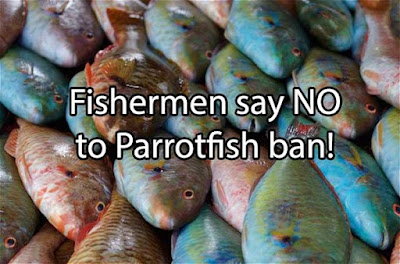
How $1.25 million Rainforest Seafoods and UWI AHML FAD's will protect ParrotFish, Coral Reef and Tourism

“At Rainforest, our operations have been guided by the highest environmental standards. We are constantly updating ourselves on developments that may threaten our marine ecosystems, both regionally and internationally. This is part of our ongoing effort to identify best practices that will both sustain the livelihood of our fishermen and protect the longevity of our marine resources”

CEO of Rainforest Seafoods, Brian Jardim, on their partnership with UWI AHML to protect ParrotFish

Finally, some concern is being shown about the ParrotFish!

Rainforest Seafoods Limit and the UWI AHML (University of the West Indies Alligator Head Marine Lab) are now teaming up on ParrotFish conservation as announced in the article “Rainforest Invests More Than $1m In Parrot Fish Conservation Project”, published Monday June 6, 2016, The Jamaica Gleaner.

Their partnership, worth some $1.25 million, will see the implementation of the following:

1.      Implement protective measures for the highly threatened reef fish e.g. Parrotfish
2.      Training local fishermen in environmentally sustainable practices

So why is Rainforest Seafoods doing this?

Rainforest Seafoods and UWI AHML FAD - Protecting ParrotFish to protect the Coral Reef and Tourism

This partnership is being built on their previous Eat Them to Beat Them project in 2012, which encourages Jamaicans to eat the LionFish in order to reduce their population as noted in my blog article entitled “National Lionfish Project reaps 66% reduction as NEPA's MTIASIC suggests Commercial Lionfish Farming”.

Dr Dayne Buddo, marine ecologist and lecturer at the UWI, who started the project, will be involved in the installation of FAD (fish aggregating devices) to attract fish farther from the shore, such as the mahimahi, tuna and jacks.

Local Fishermen will be trained to use the FAD's thereby participating in making their livelihood sustainable by protecting ParrotFish and other reef fish that maintain the reef as pointed out in my blog article entitled “How Parrotfish and Sea Urchins ban saves Coral Reef, Beaches and US$3 billion Jamaican Tourism”.

CEO of Rainforest Seafoods, Brian Jardim's company has also gone a step further by no longer importing, producing or selling ParrotFish. This as the ParrotFish are essential to the long-term health of the Reef as well as the sane, producing some 800lb of sand to build up the branch as note d in the article “Parrotfish ban?”, published Wednesday, July 09, 2014  by Kimone Thompson, The Jamaica Observer.

This loss of Parrotfish would also affect the local Fishstock, which is of main concern to the CEO of Rainforest Seafoods, Brian Jardim: “The survival of parrot fish will not only be vital to the protection of our invaluable coral reefs, but will foster a healthier and more productive ecosystem for local fishermen”.

The survival of the Coral Reef is more important than ever, as this summer the Reef is expected to experience a major Bleaching Event that may devastate the Coral Reef and affect Tourism as noted in my blog article entitled “Why NOAA Caribbean Coral Reef Watch prediction of Coral Reef Bleaching requires ParrotFish Ban”. 

Still, thus isn't a total Parrotfish Ban as I'd hoped for in my blog article entitled “How a Parrotfish Ban with Lionfish replacement will save Coral Reefs”. But at least Rainforest Seafoods will not be selling ParrotFish, sending a strong signal to the Government of Jamaican on where they stand on the protection of the Environment!


Friday, July 15, 2016

How Corsair's ML Series Magnetic Levitation Bearing Technology heralds low-Power Solar Cooling

“All ML fans offer a huge PWM range, giving users total control over how their fans perform. Value silence above all else? At their lowest speed of 400 RPM, the ML Series will push more airflow at near silent 16 dBA (decibel A-weighting)”

Corsair comments on their website about the ML Series Cooling fans

Do you like Building PC's, sound systems or anything that requires a lot of cooling?

Then the Corsair ML Series has the fans that will get the job done as detailed in the article “Corsair Intros New Family Of Lit Case Fans, The ML Series”, published July 11, 2016, By Kevin Parrish, DigitalTrends.

Google Logo

There are ten (10) fans in the series, ranging in size from 120mm and 140mm as follows:

1.      ML Basic (x2)
2.      ML Pro (x2)
3.      ML Pro LED (x6)

Fans for cooling computers are nothing special on my blog, as I've already looked at 3M's Fluorinert FC-72 cooling systems developed by University of Alabama in Huntsville as detailed in my blog article entitled “UAH Graduate Students use 3M's Fluorinert FC-72 in Passive Cooling System – Gaming Rigs and Data Centres Noiseless Cooling Systems upgrade”.

What's special here is that these fans use Corsair’s new Magnetic Levitation Bearing technology.

By no means is this a new idea as many products feature magnetic levitation, mostly as a clever gimmick, such as the Mars by Crazybaby Levitating Bluetooth Speaker as described in my MICO Wars blog article entitled “Mars by Crazybaby Levitating Bluetooth Speaker Levitation Produces good vibration free sound”.

Combined with custom rotor design, they run quieter and faster, resulting in noiseless cooling under any load. So how exactly does this work?

Corsair's ML Series Magnetic Levitation Bearing Technology - Magnetic levitation and rotating electromagnets in action

Corsair's Magnetic Levitation Bearing technology reminds me of a blog article I did on the idea of a fan floating in a magnetic field as detailed in my blog article entitled “Global Warming and the Quest for Efficient Cooling – From Bladeless Fans to Blade Runner”.

Albeit their fans require an open standard 4-pin fan connector, you can splice this open and connect it to the required 5 VDC power supply to cool whatever you want. Take a moment to admire their impressive performance specs thanks to Corsair’s new Magnetic Levitation Bearing technology:

Google Logo
These performance specs are possible thanks to the face that the fans levitate in a magnetic field like a motor, with rotation being done by an electromagnet at the edge of the fan housing as shown in the image below.

Google Logo

This circular electromagnet changes polarity rapidly pulling and pushing the fan in a manner similar to a Maglev train as explained in my blog article entitled “JR Tokai's Chuo Shinkansen sets World Record of 603 km-h - How Maglev Train travels Tokyo to Nagoya in 40 minutes and Why HyperLoop is faster”.

But what had me interested is the fact that the fan floats on a frictionless cushion of electromagnets, making it possible to power this fan by using the very rotation of the fan to create its own power in a kind of perpetual motion like loop. Combined with Solar Power, a larger version of Corsair's Magnetic Levitation Bearing technology in a Fan can be used to make super quiet Solar Powered Extractors or even Air conditioning units!

You can still purchase Corsair's ML Series based on their new Magnetic Levitation Bearing technology. But if you're a true tinkerer, you can build a levitating fan yourself once you understand the concept of magnetic levitation and rotating electromagnets!