My Thoughts on Technology and Jamaica

Sunday, January 3, 2016

How US microbeads ban by 2017 means NEPA ban coming to protect Coral Reefs

“The US has acted, and the UK should be acting right now. The evidence is clear and unequivocal: microbeads in cosmetics products are ending up in our waters, in our sea life, and in our own bodies, with pesticides and other chemicals attached,”

Leader of the Green Party, Natalie Bennett calling for the UK to ban microbeads in personal products

It's bad enough that we're polluting outer space with satellite debris and leftover from rocket launches as noted in my MICO Wars blog article “Why 60 years Space Junk will make future Manned Missions difficult”.

Now it’s becoming more and more apparent that there is tons of plastic floating out there in the oceans.  So much so that most of it has formed swirling islands, such as the Great Pacific Garbage  Patch

 Google Logo
 
So it was great news to hear that President Barack Obama has signed the bi-partisan supported Microbead-Free Waters Act of 2015 as reported in the article “The U.S. just banned Microbeads, those tiny plastic environmental disasters on your facewash”, published 31 December 2015 by Zoe Schlanger, Newsweek.

I for one love it, as it means the animals of the sea have finally gotten justice!


This means manufacturers of soaps shampoos, body scrubs and any other product that uses these plastic microbeads for their scrubbing effect have to remove them from their products by July 1st  2017 as reported in the article “US to ban soaps and other products containing microbeads”, published Tuesday 8 December 2015 by Oliver Milman, The UK Guardian


So what exactly are microbeads?

Microbeads explained - Bad for Agriculture and Aquatic life

Microbeads are basically tiny bits of plastic that are spherical or having other shapes, usually 5 millimeters in diameter, that are placed into your washing products and even toothpaste. Their main purposes is to provide an exfoliating or cleansing effect to help clean these parts of your body better that need a good scrubbing!

Google Logo

Problem is these microbeads are made from non-biodegradable plastic.

So once they’re used and down the drain, it ends up in your sewer system (for First World Countries) where it cannot be processed by Sewage Systems. It also ends up in Waste Water reclamation systems that process water for drinking and agricultural, creating further environmental and ecological havoc.

This means that microbeads can potentially end up in water for agricultural uses, drinking water and eventually into the sea to be ingested by fish and other marine life, with toxic results! This as the microbeads can soak up pollutants, which the fish eat, mistaking them for fish eggs.


This results in the fish either dying from the microbeads and the toxic pollutants. If the survive and are caught by humans or animals and eaten, we to will be affected by the microbeads and poisonous toxins we ingest, causing everything from liver damage to birth defects!


In the Caribbean and other Third World countries it poses an even more serious problem; it affects our fishing industry, as microbeads cannot be processed by our Water Filtration Systems. Akin to our First World counterparts, these microbeads eventual end up in the ocean, killing our fish, coral reefs with a long term effect on our tourism product!


So now that the US of A is taking action and other may follow, what can be done to remove plastic from the environment?

Britain and Taiwan mulling microbead ban – Jamaica importation ban needed to protect Coral Reefs

Already other countries are considering bans on these persistent plastic pollutants.

Taiwan's EPA (Environmental Protection Agency) is reportedly considering similar bans on the use of microbeads in products imported and made in their country as noted in “Taiwan mulling whether to follow United States banning of microbeads”, published January 1, 2016, The China Post.

Britain is now coming under pressure from the Leader of the Green Party, Natalie Bennett to enforce a similar ban on microbeads use in such products as reported in the article “Call for UK ban on ‘microbeads’ pollutant after Obama takes action in US”, published Thursday 31 December 2015 by Jon Stone, The Independent.

Jamaica may soon follow, as a ban on microbeads would protect our fragile Coral Reefs and protect Parrotfish, the guardian of the Coral as noted in my blog article entitled “How Parrotfish and Sea Urchins can save Coral Reef, Beaches and US$3 billion Jamaican Tourism Industry”. 

As the US of A plans to ban microbeads in soaps, toothpaste and body scrubs, the Jamaican Government can by 2017 ban the importation of such products.   

Here’s the link:


Saturday, January 2, 2016

Why @UCBerkeley and @MIT Optical Processor means Li-Fi and 5G Wireless by 2020

“This is a milestone. It’s the first Processor that can use light to communicate with the external world. No other Processor has the photonic I/O in the chip.”

Associate professor of electrical engineering and computer sciences at the University of California, Berkeley Vladimir Stojanovic, commenting on the development of a working Optical Processor.

Optical Processors may soon be possible within my lifetime.

A collaboration between UC Berkeley and MIT (Massachusetts Institute of Technology) has yielded a process that uses Optical pulses instead of electricity as reported in the article “This futuristic chip transmits data in an entirely new way”, published December 25, 2015 By Gabe Carey, Digitaltrends.


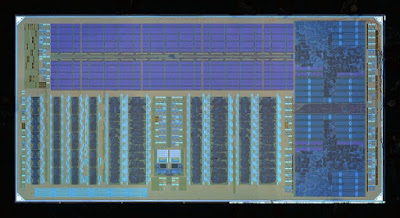
This Processor, which consists of 70 million transistors and 850 photonic components onto a 3-by-6-millimeter chip, isn't all Optical, as it still has to be powered by electricity as noted in their publication in the Thursday December 24th 2015 print issue of the journal Nature!

The main researchers on this project are all quite noteworthy:

1.      Mark Wade, Ph.D. student at the University of Colorado, Boulder
2.      Yunsup Lee, a Ph.D. candidate at UC Berkeley
3.      Jason Orcutt, an MIT graduate at IBM Research Center in New York

In their experiments, the researchers transmitted data to a receiver 10 meters in a fiber optic loop as a test of its data transmission capabilities.

This makes this Optical Processor more suited to be used in Switches and routers rather than in Smartphone, tablets and computers to quote Associate professor of electrical engineering and computer sciences at the University of California, Berkeley Vladimir Stojanovic: “Light-based integrated circuits could lead to radical changes in computing and network chip architecture in applications ranging from smartphones to supercomputers to large data centers. Something computer architects have already begun work on in anticipation of the arrival of this technology”.

UC Berkeley and MIT Optical Processor – Telecom Providers rejoice, consumer products coming

It’s a huge breakthrough, as the data inputs into the Processor are all Optical and its made in a  foundry that mass-produces high-performance computer chips as declared in the Press Release entitled “Engineers demo first Processor that uses light for ultrafast communications”, published DECEMBER 23, 2015 By Sarah Yang, Berkeley News.


They fabricated the microprocessor in a foundry that mass-produces high-performance computer chips, proving that their design can be easily and quickly scaled up for commercial production. 

This is quite fortuitous and is similar to what I'd envisioned when IBM had developed a Photonic Optical Processor as described in my blog article entitled “IBM develops 25Gbps Photonic Optical Processor at the 90nm level - IBM's Red Dawn for Optical Processors”. 

However it may only find application initially in Router and Servers used in Telecom Switches.
So what does those this mean for Computer, Smartphone and Tablet Processors in the Future?

UC Berkeley and MIT Optical Processor – How the Optical Processor was made

Commercial production is around the corner, possibly by 2020 as 5G is coming as reported in my blog article entitled “ITU publishes 5G IMT-2020 Roadmap - Why US Telecom Providers, @Digicel_Jamaica and @LIMEJamaica like to travel off the beaten Path”. 


The researchers deigned the Optical Processor to communicate in light only. So no Optical to electrical conversion was done with the chip. This means that the motherboard or chipset was fiber optic. 


The researchers developed photonic I/O components to guide the UV light through the Processor:

1.      Silicon waveguide
2.      Ring modulator
3.      Photodetector
4.      Vertical grating coupler  

The entire chip was fabricated using conventional process found in a typical foundry that mass-produces high-performance computer chips. This makes adjustments and optimization possible without any radical changes to the fundamental process already being used to fabricate Processors.

First, they made a few changes to the p and n type doping needed to make the transistors as well as the etching masks so as to create the necessary Optical waveguide traces within the silicon.

Once that problem was cleared, they then had to develop an interface within the Processor between the Optical input from the outside world, within the silicon waveguide and the electrical parts of the Processor. They designed a Vertical grating coupler that performed this task.

The researchers took advantage of the fact that using the silicon doped with germanium acts as a photodetector. Thus they used this unique property of germanium to make a photodetector to read the UV Data pulses travelling along the silicon Waveguide.

Transmission was done via the use of the ring modulator which provided a low-energy modulation of the UV light. This ring modulator had a p-n doped junction connected to the silicon waveguide and effectively was a mini LED (Light emitting Diode) that produced UV to send data along the waveguide to the outside world.

Most likely as the UV light leaves the Optical Processor via the vertical grating coupler, an amplifier amplifies the light to be interpreted by the DSP (Digital Signal Processor) as in a mobile device or Fiber optic modem as in a desktop computer or router.

Ph.D. candidate at CU-Boulder and a co-lead author of the study Mark Wade is confident of this, quote: “We figured out how to reuse the same materials and processing steps that comprise the electrical circuits to build high-performance Optical devices in the same chip. This allows us to design complex electronic-photonic systems that can solve the communication bottleneck in computing”.

UC Berkeley and MIT Optical Processor – Cool Operator that runs faster

This Optical Processor demonstrates that faster Processors don't need to have more power, as is the case with silicon Processors. The Optical Processor used 1.3 picojoules per bit, or roughly 1.3 watts of power for every terabit of data per second!


By reducing the need to power a large motherboard and a Processor as well as to convert data from Optical to electrics from the DSP (Digital Signal Processor) in the case of a smartphone or the Fiber Optic Modem in the case of a computer can make a computing device appear to be faster at lower power levels.

This makes the Optical Processor suitable for Routers and Switches for long haul Fiber Optic Networks as they’ll process data without the need for Optical-electrical conversion as noted in “Chip promises faster computing with light, not electrical wires”, published December 23, 2015 by Stephen Shankland, CNET News.

It also makes the device run cooler, making it possible to reach faster speeds without having to increase cooling requirements.

UC Berkeley and MIT Optical Processor - Optical Bandwidth just in time for 5G in 2020

This Optical Processor has benefits in terms of bandwidth, as the data input and output is Optical, allowing the dual-core design to process more data.

According to the researchers, it can process some 300 gigabits per second per square millimeter, about 10 to 50 times greater than its electronic counterparts!

The fact that it directly processes Optical Data means that the Developement of Li-Fi Networks can progress unhindered by limitations of the Devices as noted in my blog article entitled “Why pureLiFi Solar Powered Li-Fi is coming to Apple iPhone with 5G Internet by 2020”.

This development will be bang on time as 5G is expected in 2020. Expect similar tech to be licensed and used in smartphones, Tablets, Smart TV as well as desktop computers by 2020.


How the SRC and IAEA are using irradiation to make Ginger Rhizome Rot resistant

Ginger farmers rejoice! A solution for Rhizome Rot is finally being developed for Jamaican farmers!

The SRC (Scientific Research Council) in partnership with the IAEA (International Atomic Energy Agency) has begun the process of developing Ginger resistant to Rhizome Rot as reported in the article “SRC Begins Project to Eliminate Rhizome Rot”, published December 31, 2015 By Tomeico Gunn, The Jamaica Information Service.

The partnership between the SRC and the IAEA begun almost three (3) years ago as the Ministry of Agriculture was in search of a solution to Rhizome Rot. This as it was affecting Jamaica Ginger Farmers, who mainly cultivate the Jamaican yellow and blue Ginger (Zingiber ofticinale Rose.) variety.

This is economically important to Jamaica, as we are on the cusp of achieving 5% of global demand for Ginger if this works as explained in my blog article entitled “Ministry of Agriculture say Ginger can achieve 5% of Global demand by 2019 - Boost to Ginger Farming Coming as it’s easy to Grow”.

In fact, the shortfall in Ginger (Zingiber ofticinale Rose.) production in Jamaica is so great, some Americans have been coming to Jamaica to farm Ginger (Zingiber ofticinale Rose.) specifically for their purposes since January 2015 as reported in my blog article entitled “doTERRA and FarmupJamaica – Jamaican Ginger shortfall as Red Stripe Project Grow could boost acreage for Ginger Wine and Beer”.

 So what exactly is this Rhizome Rot Disease? 

What is Rhizome Rot - Panama disease for Ginger

Rhizome Rot condition is cause by the presence of the following pathogens on the Ginger (Zingiber ofticinale Rose.) tuber, also called a rhizome:

1.      Fungus Fusarium spp.
2.      Root knot nematode Meloidogyne sp..
3.      Fungi Rhizoctonia solani,
4.      Fungi Pythium sp.
5.      Bacterium Pseudomonas sp.

Ginger plants affected by these pathogens will exhibit the following symptoms of Rhizome Rot:

1.      Stunted and yellow plants
2.      Lower leaves dry out, turn brown 
3.      All aboveground leaves and stems dry out completely

The Ginger (Zingiber ofticinale Rose.) plant collapses slowly over several weeks, with the Ginger Rhizome showing a brown discoloration. Shriveled in appearance, the Ginger (Zingiber ofticinale Rose.) rhizome will eventually decay appearing shriveled on the outside with most of the internal structure becoming knotted and fibrous in appearance when cut open.

Given the fact it takes nine (9) months to grow Ginger (Zingiber ofticinale Rose.) and the variety of pathogens that cause Rhizome Rot, methods of controlling the disease aren't partiality effective.

Immersing the Rhizome seeds in hot water at 50C for 10 minutes, after detecting Rhizome Rot, basically pasteurization does not help. Neither does using pesticides like Ridomil MZ (0.2%) nor Topsin M (0.2%) by dipping the rhizomes seeds for 20 minutes and allowing them to air dry before planting.

The disease pathogens spread from contact with soil. The mere act of going into the field to inspect the plants allows the spores of the bacterium or fungi to travel on your clothing, water boots and on infected Ginger plants being transferred, infecting other infected parts of your field, to quote Executive Director of the SRC, Dr. Cliff Riley: “Once an infected plant is moved from one area and planted in another, the fungus can be transferred”.

This is very similar to the Panama Disease which affects bananas and is cause by a similarly infectious pathogen the Fusarium Oxysporum fungi as explained in my blog article entitled “How the Panama Disease can destroy Caribbean Banana Farming by 2020”.

Like Banana farmers, most Ginger farmers have to destroy their crops by burning as well as abandon field.

They'll also have to sterilize their farm equipment, as the spores can live for years on their clothing, tractors and other field implements e.g. cutlass, hoes, shovels. The field infected with the bacterial spores and fungi will have to be abandoned or used for other crops unaffected by the Rhizome Rot.

So a solution was needed to make the Ginger (Zingiber ofticinale Rose.) plants resistant to the Rhizome Rot pathogens, reviving old abandoned fields to cultivation.

Ginger and Irradiation – Rolling the Genetic Mutation Dice to create Rhizome Rot resistant plants

The Research conducted jointly by the SRC and the IAEA involved using irradiation of the Ginger (Zingiber ofticinale Rose.) plants. This is very similar to heating the Ginger Rhizome seeds in hot water.

The difference, however, is that the heat is transferred using a radioactive source, most likely Cobalt-60 that emits Gamma rays.

Also, it make another case as to why Jamaica had Nuclear Safety and Radiation Act in July 2015 as reported in my blog article entitled “Jamaica passes Nuclear Safety and Radiation Act - Why ICENS Slowpoke is being upgraded and How Nuclear Power may mean Cheaper 4G LTE”; they’d been experimenting with irradiating plants and animals for the past three (3) years!

Irradiation is used in the US of A to kill microorganisms such as E. coli O157:H7, Campylobacter, and Salmonella. This ionizing radiation destroys the bonds in DNA, making the pathogens die and any remaining pathogens unable to reproduce correctly.

The smaller the pathogens, the less DNA they have and thus the higher the dosage of Gamma radiation that will be needed to irradiate them. The exposure to radiation also affects the plant itself, killing any living cells inside of the Ginger Rhizome seeds.

In so doing, it delays ripening of the Ginger Rhizome seeds and may alter the Genetic code of the Ginger (Zingiber ofticinale Rose.). Fortunately the Rhizome Rot pathogens are nematoda, fungi and bacterium and the Ginger Rhizome seeds are not being eaten, meaning the researchers at the SRC and IAEA can irradiate it at levels above those used for food for consumption.

The Researchers at the SRC and the IAEA realized that this alteration seemed to be creating disease resistance in the Ginger (Zingiber ofticinale Rose.), as it seemed to resist exposure to the pathogens that normally cause the Rhizome Rot. The process is very tedious, as after each dose of radiation, you have to plant the Ginger Rhizome seeds and wait another nine (9) months to see if was effective. 

After three (3) years of trial and error, it seems they’re close to hitting paydirt!

Rhizome Rot Resistant Ginger in 2017 – Jamaica may be doing Food Radiation Experiments

But the challenges are obviously great.

The researchers won’t be able to know if they’re gotten lucky until 2017, to quote Executive Director of the SRC, Dr. Cliff Riley: “The challenge that the SRC has, is the length of time that the plant takes to grow, with a nine-month waiting period, and then three to four months for it to re-sprout”.

This shortcut form of GM (Genetic Modification) changes the Genome of the plants, which then can be passed on to the next generation via breeding once the resistance profile of the new Ginger Rhizome plants is known, as Executive Director of the SRC, Dr. Cliff Riley asserts, quote: “Once the plant is resistant to the virus, you can then start using the rhizomes again to cultivate the plant”.

The SRC and the IAEA are basically rolling a genetic engineering dice; irradiating the Ginger Rhizome seeds and then inoculating it with Rhizome Rot pathogens until it a genetically altered version of the Ginger rhizome spontaneously occurs that’s resistant to Rhizome Rot.

One wonders if this can also work with other plants as well, such as bananas suffering from the Fusarium Oxysporum, the fungus that causes Panama disease. But more intriguing; what other Jamaican Government experiments are being conducted using Radioisotopes with IAEA’s assistance?

Here’s the link


Friday, January 1, 2016

How Bio-Bean is making Biofuel from Coffee Waste as Coruscant looms

“We've gone from me with a silly idea to that in just over two years”
CEO and co-founder, bio-bean, Arthur Kay, on converting Coffee Waste into Biofuel

Coffee is a drink best served hot especially in New Kingston and Half-Way-Tree as reported in my blog article entitled “Why I love Coffee Houses in Kingston - Great place for Secret Business Meetings in Kingston and St. Andrew”. 

But if you make your own Coffee from the roasted beans or you buy ground Coffee, it might have occurred to you that disposing of the Coffee waste presents a problem!

This is where the company Bio-Bean steps in to convert Coffee waste into biofuels as explained in the article “This man's factory is turning waste Coffee into green energy”, published October 15 2015 by James Temperton, The Jamaica Observer
 

The Coffee waste that would usually clog kitchen sinks is converted by Bio-Bean into two products:

1.      Biomass pellets
2.      Biodiesel

So how did this company Bio-Beans come about? And is it economically viable?

Original of Bio-Beans - Recycling of Coffee Waste and Cooking Oil into Biofuel

Arthur Kay, an architecture student at The Bartlett, UCL, realized as an entrepreneur that he had Coffee all wrong. He thought he could create a Coffee house where you could make money both from the sales of Coffee as use the Coffee waste from the ground beans to create electricity.


However, he soon realized that he could make money by converting Coffee water from other people's Coffee pots into biofuel. This after he became aware of a few facts about Coffee consumption in Britain:

1.      70 million cups of Coffee annually are drunk in the UK
2.      500,000 tonnes of waste 
3.      £80m of dispose of the Coffee waste within the Coffee industry

Knowing this, he started his renewable energy company Bio-Bean in a 20,000 square foot factory, employing with 25 people over a two (2) year span. His expressed aim; to capitalize on the growing abundance of Coffee Waste and convert it into Biofuel.

This idea is very similar to recycling Waste Cooking Oil, which like Coffee Waste is usually generate in restaurants or eateries, something that HERO BX plans to do in the Caribbean as noted in my blog article entitled “HERO BX commercial-scale biodiesel plant - How Jamaica can recycle Cooking Oil to supply US$614.92 billion market”.


They collect Coffee Waste from manufacturing plants in London as well as from Coffee Shops in London. This is then sent to a plant in Edmonton in North London, when it’s processed into Biodiesel with the solid waste then used to make Biomass pellets.

Most likely, that company uses a process involving GM (Genetically Modified) bacteria, such as the Escherichia Coli as developed by Dr Patrik Jones of Imperial College London as reported in my blog article entitled “How Imperial College London Escherichia Coli makes Propane and Biodiesel from Cooking Gas”.
 

The savings from the recycling of Coffee Waste into Biofuel is quite amazing, as they convert some 50,000 tonnes per year, equal to the waste produced by 100 cups of Coffee per second. Also a tonnes of Coffee waste translates to 6.8 tonnes in carbon emissions.

Coffee Waste to Biofuel - Why Biofuel from Coffee Waste will be as big as Coruscant

This would seem to imply that there is room for expansion, especially as more people will eventually begin to live in the cities, requiring more recycling of the waste generated rather than dumping it, to quote CEO Arthur Kay: “We're rapidly becoming an urban species, these cities act as massive amplifiers for the good and the bad”.

Good to note that he's recycling the Waste from the Coffee producers who make ground Coffee as well as Coffee shops. As the world gets more urbanized, we'll all be drinking Coffee from Coffee houses in massive cities.

Earth will very likely become like Coruscant, the planet in Star Wars Episode I: The Phantom Menace, by the year 2100; one large planet-sized city.

However, he hasn't even begun to tackle pulp waste generated from Coffee Farms in eighty countries in South and Central America, the Caribbean, Africa and Asia. The big three in Coffee production are as follows:

1.      Brazil
2.      Vietnam
3.      Indonesia

Albeit 80% of the world's CO2 emissions come from the cities as the world population swells towards 11 billion by 2100 as projected in my blog article entitled “United Nations Population Division says 11.2 billion people by 2100 - Why Africa and India Population exploding as Insect Meat is coming” there is also an ecological disaster occurring in the Developing World Countries where Coffee is grown.

In short, we’re running out of Coffee!

Coffee shortage in 2016 – Drought, Agricultural Towers and Biofuel Future

There is a coming shortage of Chocolate, made from the cocoa plant which grows under similar conditions as reported in my blog article entitled “Chocolate Shortage in 2020 – Chinese, Indian and American addiction Inflates Price of Cocoa as Jamaica needs to produce Chocolate”.

Coffee too will also face shortages as Third World countries like Brazil face drought as reported in the article “Global Coffee Shortage Looms as Market Braces for Climate Change”, published October 1, 2015 by Whitney McFerron, Bloomberg

Being the world’s biggest producer will affect the global supply of Coffee. Brazil aside from battling the Zika Virus as noted in my blog article entitled “739 Zika Virus Cases in Brazil and 2 adult deaths - How Zika Virus is causing birth defects in unborn Brazilian babies”.

Brazil, which produces both, will have to decide between land usage for Food Security and housing versus growing cash crops that have no real nutritional value. This means less or more expensive Coffee and Chocolate to satisfy the tastes of growing affluent billions living in these massive cities.

Especially as exotic concoctions such as glow-in-the-Dark Iced Coffee Chocolate Milk becomes popular described in my blog article entitled “How to Make Glow-in-The-Dark Iced Coffee Chocolate Milk – How Coffee can be made healthy for Children”.

In a bid to satisfy the demand for food and luxuries like Coffee and Chocolate, these future cities might resort to growing their food in Agricultural towers as described in my blog article entitled “How IGES Canada Ltd Vertical Hydroponic Aquaponic Towers make low cost Organic foods”. 

So companies like Bio-Bean and HERO BX are a good long-term investment, as they'll grow as the inevitable Coruscant of the future will require food for humans and fuel for their vehicles!