My Thoughts on Technology and Jamaica

Wednesday, August 5, 2015

How Bamboo Farming in Peckham, Clarendon boost Farming via Export of VAP

“Through this project, also, we expect to see a curtailment of the rural-urban drift. We expect that the citizens of Jamaica will be more appreciative of locally produced goods and we expect that this project will be so successful that it will be replicated across Jamaica”

Chairman of the Peckham Development Committee, Andrew Carty, commenting on the OAS donation towards the training of Bamboo farmers

Clarendon peeps are slowly climbing the bamboo pole of success.

The Farming district of Peckham in the hills of northwest Clarendon were granted JA$15-million from the OAS (Organization of American) to training farmers to develope Bamboo (bambusa vulgaris) farming in their community as reported in the article “Bamboo Goes Commercial In Peckham”, published Wednesday August 5, 2015, The Jamaica Gleaner


Google Logo

The OAS funding is part of the 2015-2017 programme cycle under the theme 'Social Development and Creation of Productive Employment' to train some eighty (80) persons to utilize some forty (40) acres of land for a communal Bamboo farm as reported in the article “80 Clarendon Youths To Be Employed In Bamboo Project”, published Monday August 3, 2015, The Jamaica Gleaner.

That's just for starters, as another JA$10 million for the start-up phase of the program is to come from the NHT (National Housing Trust).

Bamboo Farming in Peckham, Clarendon – Money flowing into Clarendon Farming

This latest donation is in addition to some JA$1.4 million from the Embassy of the People's Republic of China and JA$500,000 from the CARILED (Caribbean Local Economic Development Project).

The project hasn't started as yet, but project originator and Member of Parliament Richard Azan is predicting a September 2015 start to the training farmers to grow and develope Bamboo Farming in community of Peckham, in northwest Clarendon.

Google Logo

Finally, Bamboo (bambusa vulgaris) farming is moving forward in Jamaica since the motion put forward by Senator Norman Grant in Parliament on Friday January 17th 2014 to restart Bamboo Farming as explained in my blog article entitled “Senator Norman Grant proposes revival of Bamboo and Rattan Industry in Jamaica - Private Sector involvement for the Large-Scale Growing of Bamboo Gods and Iron Men needed”.

So how exactly did Bamboo Farming start in Peckham? Can this be replicated through Jamaica?

Bamboo Farming and Jamaica – Huge Export potential for VAP

Bamboo (bambusa vulgaris) farming has huge export potential for a variety of products from Furniture, Craft items, Charcoal and even ketchup as reported in the article “Local bamboo ketchup now available”, published Monday, January 12, 2015, The Jamaica Observer.

Google Logo

However, up until March 2014, the export of Bamboo Charcoal, revered for its low smoke, slow burning and delicate flavor imparted to Bar-B-Que food, has been facing problems due to the lack of Bamboo furnaces as reported in my blog article entitled “Jamaica's Bamboo Charcoal exports stalled by lack of Bamboo Furnaces – How to build a Fresnel Lens Solar Powered Bamboo Furnace and produce Activated Charcoal byproduct”. 

Google Logo

However, for the Peckham Development Committee Bamboo Project, the second of its kind,  they plan to focus on certain value-added products as listed in the article “Bamboo Project To Get Under Way In Peckham”, Published Thursday June 4, 2015 by Shanique Samuels, The Jamaica Gleaner.  

These products are as follows:

1.      Bamboo charcoal
2.      Bamboo lumber/wood products
3.      Bamboo edible products

Bamboo (bambusa vulgaris) is the only wood in Jamaica that can be legally turned into Charcoal, making Bamboo Charcoal the easier product to be made from Charcoal.

Already, Jamaica has exported some 24,000-lb of Bamboo Charcoal worth JA$5 million as reported in the article “Gov't exporting second batch of organic bamboo charcoal”, published Wednesday, August 05, 2015, The Jamaica Observer

The Bamboo and Rattan Industry is worth nearly US$15-billion and projected to reach some US$20 billion by 2015.

These figures that have made Deputy Director General, Economic Policy planning and logistics at the Planning Institute of Jamaica, Richard Lumsden declare that money is there for the taking, quote: “This project is a 'low hanging fruit' that has the potential to provide immediate employment. It was, therefore, selected due to its potential to mitigate unemployment through the creation of small businesses as well as providing employment opportunities”.

So with Vision 2030 on the horizon, the community of Peckham, Clarendon can make a living from Bamboo (bambusa vulgaris).


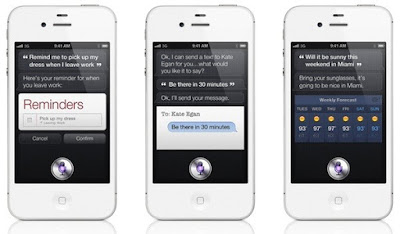
Apple's Siri Voice Assistant to answer Calls in 2016 - How @IBM's Watson may power Siri AI in Corporate and Enterprise Cloud Heaven

Fancy having a personal Robot answer you phone calls?

Apple plans to do just that with Siri Voice Assistant by making her into a replacement for your Voicemail in 2016 as reported in the article “Apple may enlist Siri to answer your phone calls”, published August 3, 2015 by Lance Whitney, CNET News.


According to reports, making the Siri Voice Assistant answer your incoming phone calls is a feature coming with the next roll-out of iOS 10. Apple Engineers are currently testing this new feature for a 2016 launch.

If true, then it'll make the Siri Voice Assistant the first true AI (Artificial Intelligent), similar to IBM's Watson plan back in May 2014 to answer Voice Calls in a Call Center using Natural Language Algorithms as reported in my blog article entitled “IBM's Watson soon to be a Watson Engagement Advisor in Call Centers - The Internship of Ask Watson 40% faster Search puts Customer Service Agents in Jeopardy at The World’s End”.

So how will this new service work? And is there a connection to IBM?

Apple's Siri Voice Assistant to answer Calls - How the Siri Voice Assistant AI will work

The service would work as follows as explained in the article “Apple is preparing to launch a voicemail service that will use Siri to transcribe your messages”, published Aug. 3, 2015 by James Cook, Business Insider.  
 
1.      Siri Voice Assistant answers you incoming call if you don't pick up your phone, using a Natural Language Algorithms
2.      Siri Voice Assistant would then hold a conversation with the person over the phone
3.      Siri Voice Assistant would use the Apple iCloud to tell the customer preset messages but in a conversational format
4.      Siri Voice Assistant would explain to the user that you cannot answer the phone, again in conversational format
5.      Siri Voice Assistant would then take a message if you decided to leave one
6.      Siri Voice Assistant would then take the caller's voice message and convert it into a Text message

Via the Siri Voice Assistant AI, all Calls would be converted to a simple-to-read Text, with possibly an option to listen to the original Voice Message. That's how it'll work in a Nutshell, expanding on Siri Voice Assistant's ability to just play Voice Messages, as Voicemail-to-Text is a feature neither Google Now nor Microsoft Cortana doesn’t have.

So how does this tie in with IBM? And does this mean that Apple’s planning to launch an MVNO (Mobile Virtual Network Operator) push, basically becoming their own Telecom Network.

Secret behind Siri Voice Assistant AI - How IBM's Watson may be behind Apple

This requires Natural Language algorithms to give Siri Voice Assistant some character, as Siri Voice Assistant is just really an automated Voice Command replacement for manually pressing buttons as explained in my Geezam blog article entitled “Siri and Kinect: Heralds of a coming world free of Remote Controls”. 

But combined with IBM Watson's Natural Language API (Application Interface), it'll make Siri Voice Assistant intelligent enough to answer calls and take messages. In fact, she'll become so “human” to the point that Apple and IBM may start looking into spinning off the Siri Voice Assistant AI as a separate product.

This isn't mentioned in any of the reference articles, merely my educated hypothesis. I believe as more information trickles out, it will be revealed that Apple and IBM are really the force behind making the Siri Voice Assistant Artificially Intelligent.

IBM is currently in a partnership with Apple since July 2015 to make iOS into a secure enough platform for Corporate and Enterprise customers as explained in my blog article entitled  “Apple and IBM for "IBM MobileFirst for iOS – How Apple with IBM Cloud Computing indicates Apple-Microsoft-IBM-Google Deal Possible in the Future”.

From August 2, 2015

In fact, Apple is selling Apple Macbook to be used by some 380,000 employees as their partnership deepens as explained in the article “Over half of IBM’s 380,000 workers could soon be on MacBooks”, published August 5, 2015 By James Vincent, The Verge and “IBM, Apple’s Rival-Turned-Partner, Plans to Help Other Companies Adopt Macs”, published Aug. 5, 2015 by Robert Mcmillan,  The Wall Street Journal.

But IBM has been doing research into Natural Language Artificial Intelligence since I was in High School, starting with Deep Blue as explained in my Geezam blog article entitled “IBM and the Watson”.

IBM’s Watson and Apple’s Siri – VoiceMail Match made in Corporate and Enterprise Cloud Heaven

Back then, IBM had been testing Watson’s bedside manner as it relates to making diagnosis of patient's illness as explained in my blog article entitled “IBM's Watson soon to be a Watson Engagement Advisor in Call Centers - The Internship of Ask Watson 40% faster Search puts Customer Service Agents in Jeopardy at The World’s End”.

This was thanks to a partnership between IBM, Memorial Sloan-Kettering and WellPoint back in May 2014. That initial research set the platform for their push into healthcare and the use of their Natural Language Supercomputer and Cloud Storage business in the Healthcare Sector.

IBM formed a partnership with pharmacy chain CVS Health to make more accurate dispensation of drugs based on a patient’s medical health records, prescriptions, environment, even fitness devices as reported in “IBM Watson Health now counts CVS Health as a partner”, published JULY 30, 2015 by  Jonathan Vanian, Fortune Magazine

This means that their services will be coming to some 7,800 pharmacies owned by CVS to not only do preventative healthcare but also help patients get better faster as explained in “CVS pharmacy is bringing IBM's doctor-like supercomputer Watson into its 7,800 stores”, published July 30, 2015 by Julie Bort, Business Insider.

So if IBM is expanding into the Health Sector with Watson, then it can only be imagined that Apple, with whom they already have a business partnership, will have some aspect of Watson in their Siri Voice Assistant AI come 2016.

Heck, maybe they’ll team up to actually make that MVNO counterweight to Google Fi in 2016 as well as described in my blog article entitled “Google's Project Fi Network – How @Google Fi's @Sprint and @TMobile MVNO will force @ATT and @Verizon to join their VoLTE Forces

After all, in a World where Everything is Possible, it pays to Think Different.


Tuesday, August 4, 2015

GamesCom 2015 in Germany - Why VR will save Video Games and Why Jamaica needs a Design and Developer Video Game Conference


“This is a very positive signal for us because it is usually in the second half of the year that we see a huge chunk of sales in our industry. No other media sector in Germany is growing as strongly as the computer and Video games industry”

Head of BIU, Maximilian Shenk, commenting on a recently concluded study that suggests that the Video Game Industry is on the rise

GamesCon, the largest Video Game Conference in Germany and possibly the World, starts on Wednesday August 5th 2015 at Koelnmesse, Cologne's International Exhibition Center, located in Cologne, Germany as reported in the article “Gamescom: Gaming industry surging ahead”, published August 3 2015, by Rolf Wenkel, DW.  


This is happening at the same time as the GDC (Game Developers Conference Europe) Europe, which is also being held in Cologne, Germany. Both events will see some eight hundred (800) developers from forty five (45) countries in attendance to showcase the latest and the greatest in the World of Video Gaming.

Game Developers attending GamesCon has increased by some 53% since 2009, with a corresponding 82% increase in visitors eager to check out the Exhibitions, space for which has increased by 61%. All-Day Tickets have already been sold out, and the number of attendees is expected to top the 2014 figure of some 335,000 people.

This guarantees that the Koelnmesse International Exhibition Center will be full to brimming, to quote Head of Koelnmesse Gerald Böse:  “Gamescom has been a true success story since it began to be held in Cologne. And it is reflected in all key figures such as the number of developers attending and visitors”.

So what will be on display for the viewing Public that's expected to draw such a crowd?

GamesCom 2015 in Germany - Why VR and AR will save the Video Game Industry

For one, Virtual Reality Gaming as described in my blog article entitled “@Oculus Mobile VR Jam 2015 - How @samsung Gear VR is Gearing up for Competition in the VR and AR Space”. This despite the fact that we may not quite be ready for it, both mentally and physically.


Virtual Reality Gaming huge departure from Virtual Reality from the 80’s, was clearly the buzz at the recently concluded of E3 (Electronics Entertainment Expo) in June 2015 as reported in “The biggest Video game conference of the year is becoming the virtual reality show”, published June 13, 2015, by Ian Sherr, CNET News.  

Modern VR differs from the 80's in that the developement of accelerometers, magnetometers and GPS means that the full range of your head and body motion can be accurately tracked. This allows you to move yourself around in the game instead of just being a passive observer.


The developement of Gaming Controller that allow the gamer to directly interact with their Gaming environment is the next evolution that VR headsets need in order to bring these alternate realities to life.

So too is the need for improved haptic feedback mechanism as well as EEG based controllers that can directly connect your mind into the game like the Muse Mind Controller as described in my blog article entitled “IndieGogo funded Interaxion debut US$199 Muse Mind Controller at Le Web in France - Future Silver Lining Playbook for Gaming that'll Exercise the Windmills of Your Mind”.

There Video Game Industry is set to experience some rapid expansion come 2016 with the introduction of Virtual Reality headsets for which Google is cooking up a version of Android as predicted in my blog article entitled “@google to develope Google @Android for VR - Why a VR and AR War is looming on the Horizon in 2016”.

So how developed in Gaming in Germany? Surprisingly, they have the same problems as Jamaica when it comes to the Video Game Industry.

German Gaming Industry set to rise - Why Jamaica needs a Design and Developer Video Game Conference

While the Americans seem to be experiencing a dry spell from which their Console Gaming Industry is slowly recovering as noted in the article “Retail Video game industry bounces back to life in June”, published July 16, 2015 by Nick Statt, CNET News, the Gaming Industry in the rest of the World seems set to experience a boom, especially in Germany.

According to the BIU (Federal Association of Interactive Entertainment Software) in Germany:

1.      13,000 fulltime Game Developers
2.      32,000 jobs created by Game Developers
3.      US$2.92 billion (2.67 billion euros) in Game Sales

The BIU commissioned market research firm GfK to study the German Gaming Market. They discovered that in the six (6) months of 2015 from January to June 2015:

1.         US$2.92 billion (€2.67 billion) for the Video Game Industry in Germany overall
2.         US$333.3 million (€306 million) came from PlayStation 4, Wii U and Xbox
3.         75% of Video Game sales is via Physical Storage media i.e. DVDs and Blu-ray Discs.
4.         25% of Video Games sales is from the Downloading of PC Games

All these figures represent an increase on the same period in 2015, with US$286.5 million (€263 million) in sales coming from Video Games sales to PlayStation 4, Wii U and Xbox Console owners.

23% of the sales come from the Downloading of PC Games during the same period in 2014. Games from the Apple iTunes Store and the Google Play Store accounted for some 75% of German Downloading Sales, with the remaining 25% of Video Game downloads for PC and Macs.

Overall, the GfK is projecting a 3% rise in the sales of Video Games in Germany towards the end of 2016.

The same is very true for the rest of the world, especially as we're gearing up for VR and AR (Augmented Reality) headsets from companies such as Microsoft, HTC and even Samsung as predicted in my blog article entitled “Rivalry between @Facebook and @HTC – @Google, @Microsoft, @Sony and @Samsung in VR as Video Game Console Savior and smartphones Extinction”.
  
So if you're a Video Game Developer in Germany, you'd do best to focus on developing Games for either Gaming Consoles or uploading to the Apple iTunes or Google Play App Store. 

Surprisingly, Germany faces the same problems as Jamaica does as noted in my blog article entitled “Prof. Joseph Saulter's Digital Game Design and Development Conference - US$112 Billion Video Gaming Industry may be Jamaicans Next BPO”,  as they also have an acute lack of skilled Programmers and Developers, a problem shared with their counterparts in the Engineering field.

So as GamesCom comes around, perhaps it’s time that Jamaica started our own Developer Conference to encourage Jamaican Developers and Designers from all walks of life to pursue a career in Video Game Developement.

Truly, the best way to celebrate Emancipation come Thursday August 6th 2015!


@Samsung's Second Quarter 2015 Decline and Why Chinese smartphones attractive

“Despite the launch of Galaxy S6, improvement to earnings [from the first quarter] was quite marginal due to low smartphone shipments and an increase in marketing expenses for new product launches”

Samsung's Press Release declaring their earnings for the Second Quarter of 2015

Samsung just seems to be unable to catch a break.

The South Korean smartphone maker have recorded their seventh Straight quarter of profit decline in the Second quarter of 2015 as reported in the article “Galaxy S6 fails to bring back Samsung's mojo”, published July 29, 2015 by Shara Tibken, CNET News.


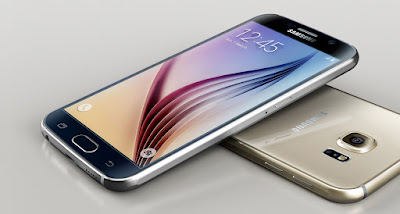
In fact, it's so bad that Samsung is planning to shave at least US$100 off the price of their Samsung Galaxy S6 smartphones both in the USA and UK as pointed out in my MICO Wars Blog article entitled “Motorola launches Moto smartphones to challenge the Apple iPhone 6S”.

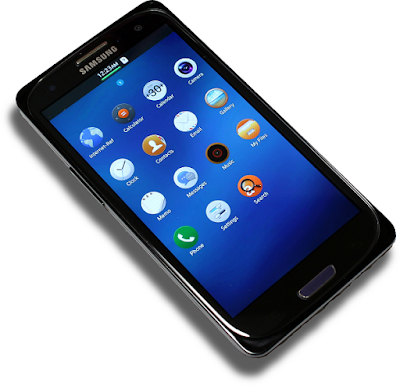
So what does Samsung plan to do? Strike back with newer smartphones, possibly with smaller screens and running Tizen!

Samsung Unpacked Event in August 2015 – Apple defeat in Second Quarter of 2015 a small Consolation Prize

They also plan to introduce new premium, mid-range and low-end smartphone models, such as possibly a new Galaxy Note 5 and Galaxy S6 Edge Plus as well as an upgrade to the Samsung Galaxy Gear Smartwatch.

All will be revealed at a Samsung Unpacked Event set for Thursday August 13th 2015 in New York City as reported in the article “Samsung sets Unpacked event for August 13 in NYC”, published July 27, 2015 by Jessica Dolcourt and Shara Tibken, CNET News.


At least they've managed to beat Apple to become the most popular smartphone maker in the Second Quarter of 2015 according to the sales stats from analyst Trendforce as reported in the article “Samsung tops Apple in slowing smartphone market”, published July 20, 2015 by Don Reisinger, CNET News.
  
This is confirmed by statistics from analyst Strategy Analytics for the same period as reported in the article “Samsung regains smartphone sales crown from Apple”, published April 28, 2015 by Steven Musil, CNET News.

So how bad was it that Samsung is now planning to reduce their S6 prices? Pretty bad, actually!!!

Samsung's Second Quarter Decline - Why Chinese smartphones are more attractive than before

First, a bit of historical perspective, as it wasn't always like this as declines in the sales of Samsung products began in the Third Quarter of 2014 as reported in my blog article entitled  “Samsung’s declares 60% Profit and 20% Sales decline - Tizen OS Response needed as India’s Diwali may Light a Path in November towards Future Prosperity”.


Before these declines, Samsung had posted five (5) consecutive Quarters of record profits, starting with the Samsung Galaxy S3, the smartphone that launched them to their status of king in the Smartphone world.

Samsung's Second Quarter of 2015 Balance Sheet isn't bad, really, as they’re profitable. But in terms of projections it falls below expectations from stockholders when compared to the Second Quarter of 2014:

  1. 7.3% decline in sales to US$41.8 billion (48.54 trillion won)
  2. 4% decline in Operating Profit to US$5.9 billion (6.9 trillion won)
  3. 8% decline in Net Income to US$4.94 (5.75 trillion won)

Now, a sudden slowdown in the sales of smartphones is upon the smartphone industry, with even competitors such as HTC and Singapore, China-based Xiaomi declaring that their sales are being reported in the article “Smartphones aren't selling like they used to (it's an Android thing)”, published July 7, 2015 by Nigel Manuel, CNET News

Even Samsung's main global rival, Apple, has lost its dominance in the smartphone sales in Chianto rival Xiaomi based on figures from Research firm Canalys as reported in the article “Apple loses top spot in Chinese smartphone market to Xiaomi”, published August 3, 2015 by Lance Whitney, CNET News  and “Apple just lost its Chinese smartphone crown”, published AUGUST 3, 2015 by Jonathan Chew, Fortune

Industry wide smartphone Decline - Lack of innovation as Developing World and Western Invasion Progresses

Apparently, the new smartphones coming out aren't innovative enough for people to spend money to upgrade.

A bigger screen just can’t beat the lower price point for a similar quality smartphones, especially smartphones are slowly trending back towards a smaller size as predicted in my blog article entitled “Celebrities Return of the Flip Phones - Flip-Force Awakening Thanks to Fappening Herald Smaller Smartphones and Smartwatch phones”.

One such example is TCL Corporation's US$200 Alcatel OneTouch Idol 2 Mini now making a beachhead in the Caribbean in a push toward the United States of America as detailed in my MICO Wars blog article entitled “US$200 Alcatel OneTouch Idol 2 Mini is a Budget phone in Royal Metallic Robes”.

So many of these smartphone maker such as Samsung and Xiaomi are slowly making a push into Developing and Third World Countries in a bid to eke out some growth such as in India as reported in my blog article entitled “Xiaomi in India after success in China - Xiaomi Looks to the West as the World is theirs for the Taking”.

There's even an allegation that Xiaomi may be coming to the US of A and Caribbean sometime in early 2016, as they've already begun testing the waters with their online Mi Store in the US of A as reported in the article “If you’re holding your breath for Xiaomi U.S. smartphone sales, you might want to breathe”, published June 27, 2015 By Williams Pelegrin, DigitalTrends and “Apple's biggest rival in China says it plans to start selling phones in the US”, published July 16, 2015  by Steve Kovach, Business Insider

Samsung's Tizen growth expectations - How Profit sharing with Users will boost smartphone Sales

Samsung has managed to sell some 1 million Tizen based Samsung Z1 during the six (6) month period from January 2015 to June 2015 as reported in my Geezam blog article entitled “Samsung sells 1 million Tizen smartphones while seeking Developers”.


Encouraged by this small but steadily growing sales, they've recently announced at their Samsung's Tizen Developer Summit hosted in Bangalore on Tuesday 30th June 2015 that they plan to use Tizen 2.3.1 instead of Android Wear as reported in the article “Samsung holds first developer summit for Tizen in India”, published 30 Jul, 2015 by ET Bureau, Economic Times of India.

The successor to the Samsung Galaxy Gear will have some new features ,including a cicular face and a rotating bezel, in keeping with Android Wear Smartwatches only with Tizen OS as reported in “Samsung Gear Roundup: New Smartwatch to Run On Latest Tizen OS, Have Rotating Bezel”, published August 3, 2015 By Sami Khan, International Business Times.

Samsung Tizen open doors for LiMo – How Profit sharing with customer will boost smartphone sales

So there is growth, just not for Google Android!

Thus I'm predicting that for smartphone to innovate, it might have to adopt untried, untested smartphone OS, such as Tizen and even the Mozilla Foundation’s Firefox OS through their Ignite Initiative as I'd predicted in my blog article entitled “Mozilla's @Firefox OS and the Ignite Initiative - Wearables, Hipster Trend as Three Chinese Dragons Dominate the Smartphone World”.

With 5G on the horizon in 2020 based on the ITU (International Telecommunication Union) 5G IMT-2020 Roadmap as reported in my blog article entitled “ITU publishes 5G IMT-2020 Roadmap - Why US Telecom Providers, @Digicel_Jamaica and @LIMEJamaica like to travel off the beaten Path” newer OS that allow regular users with no programming knowledge to partake of the App Economy will boost the sales of smartphones once more.

By supporting smartphone OS that adopt the Open Source LiMo (Linux Mobile) architecture, it will free them from a dependence on Google Android.

In a truly Open Source Mobile Environment, OS like Tizen and Firefox OS will make it possible for smartphone makers, Telecom Providers and end users (customers) to make money from the App Economy as predicted in my blog article entitled “Digicel and LIME's 4G LTE Adoption in Jamaica – Budget Tablets with Microsoft Productivity Software spark Wireless Broadband Revolution”.  

This was the original plan that the Telecom Providers had envisioned when they'd adopted 3G Internet on their Network. This is how Samsung can grow their smartphone sales, as by directly sharing profits with smartphones owners, they create an incentive to owning Samsung Products.


Monday, August 3, 2015

Security Firm Zimperium reveals StageFright Bug and Why Automated Video Playback in @Google @Android is Bad

“These vulnerabilities are extremely dangerous because they do not require that the victim take any action to be exploited”

Security Firm Zimperium zLabs commenting on the seriousness of the StageFright hack via text message that affects Google Android smartphones

It's already bad enough Hackers or the NSA (National Security Agency) have the power to remotely turn off your smartphone as explained in my blog article entitled  “NSA smartphone hack via the Baseband Processor - How NSA can remotely control your smartphone and Defense Against the Dark Arts”.


Hackers can now hack 95% of Google Android smartphones using a simple text message hack called StageFright. So says Security Firm Zimperium zLabs in the article “Most Android phones at risk from simple text hack, researcher says”, published July 27, 2015 by Don Reisinger, CNET News

So how was this vulnerability discovered?

Timeline for StageFright discovery – From Z for Zimperium to G for Google

The StageFright exploit gets its name from the fact that the vulnerability affects the default Video playback tool in Google Android called StageFright as explained in the article “Everything you need to know about the StageFright hack and how to defend yourself”, published July 31, 2015 By Robert Nazarian, DigitalTrends.

It was discovered in April 2015 by Joshua Drake from Zimperium zLabs, who immediately send Google some patches on Thursday April 9th 2015, which Google accepted.

By May 2015, a second set of issues were reported by Drake, bringing the total number of issues to seven (7). He also gave Google more Patches, all of which Google accepted and have scheduled for release at a time that hasn't been specified.

The vulnerability, called StageFright, involves sending a person a text message with a link to a video on a website. The victim clicks on the website, assuming it's an offer of some sort.

In so doing, the hacker can gain control over their smartphone. But even more troubling is that depending on the platform upon which one receives the text, they may have no say as it relate to being infected.

Security Firm Zimperium and StageFright – Google powerless as OEM’s control updates

Since informing Google of the security vulnerability and issuing security patch, which Google accepted, thing have gone quiet as this is the first time in July, some four (4) months later that I’m hearing about this.

However, it won't reach most of the affected 90% of smartphones, as the distribution of security patches is controlled by the OEM's (Original Equiptment Manufacturers).

OEM’s tend to be very slow to respond when it comes to issuing updates, being as it costs them money to do so.

Google's response isn't surprising and was quite non-chalant, to quote a Google Spokespersons in the article, quote: “The security of Android users is extremely important to us and so we responded quickly and patches have already been provided to partners that can be applied to any device. Most Android devices, including all newer devices, have multiple technologies that are designed to make exploitation more difficult. Android devices also include an application sandbox designed to protect user data and other applications on the device”

After all, many persons still have older versions of Google Android and very few customers are buying new devices ort upgrading to Google Android 5.0 Lollipop.

So rather than issue a patch for their fragmented Android Ecosystem, they're hoping that Natural Selection caused by malware will force device owners to upgrade as explained in my Geezam blog article entitled “Android Browser Security Unfixed as Google Wants you to Upgrade to Lollipop”.

So since it’s apparent that Google doesn’t care, it’s up to you to protect yourself by simply not using MMS, disableing Google+ Hangouts and also not opening suspicious text messages while on the Internet!

So how exactly does the text message hack called StageFright work?

Security Firm Zimperium and StageFright - Why Automated Video Playback in Android is a Hacker's Paradise

StageFright is a part of a slew of hacking revelations before DefCon Conference which runs from Saturday August 1st 2015 to Thursday August 6th 2015 and the Black Hat Security Conference which runs from  Thursday August 6th to Sunday August 9th, 2015, both occurring in Las Vegas, Nevada.


Already on Tuesday July 21st 2015, Security Researchers Charlie Miller, a Security Researcher at Twitter and Chris Valasek , Director of Vehice Security Research Firm IOActive have demonstrated that it’s possible to hack a 2014 Jeep Cherokee over the Internet as explained in my blog article entitled “Security Researcher hack a 2014 Jeep Cherokee - How to remotely hack an Internet Connected Vehicle as Remote Vehicle Homicide possible”.

A week later on Thursday July 30th 2015, Security Researcher Sammy Kamkar demonstrated that it’s possible to hack GM's OnStar System by tapping into the communications between the OnStar RemoteLink remote-access App and the vehicles OnStar IVE (In-Vehicle Entertainment) System as explained in my blog article entitled  “Security Researcher Sammy Kamkar GM OnStar Hack - How OwnStar can make your GM OnStar Vehicle Gone in 60 Seconds”.

This hack isn’t much different; it exploits a weakness in the communications between the Telecom Provider, the Messaging Server and your smartphone’s auto playback features for video ?

According to Security Firm Zimperium zLabs, the link sent to the victim’s smartphone contains a video, many of which now play in HTML5 on YouTube as since January 2015 as explained in my Geezam blog article entitled “YouTube switches to HTML5 with Adaptive Bitrate for better Streaming”. 

However, this isn’t a YouTube video but a malicious video on a cloud hosting service!

The video itself contains malicious code that is activated the minute the video is played by Google Android default Video Player, which is in all Google Android smartphones and Tablets.

Also it doesn’t need the YouTube to infect your smartphone, being as the App no longer works on any pre-2012 Smartphone as explained in my Geezam blog article entitled “YouTube App support on pre-2012 devices ending April 30 2015”.  

Surprisingly, due to the automated nature of playing videos in Google Android Messenger Application, the minute the victim merely opens the text without even watch into the video, Android already start analyzing the link.

Once it determines that the link is a video, it already starts to run and buffer the video, effectively preparing the system to play the video in anticipation of the person clicking on the link.

In so doing, StageFright is activated, giving the hackers remote access to your smartphone and all the data the have captured about you.

Google+ Hangouts and Text messages - How Hackers can declare Thermonuclear War with StageFright

It's even worse if you have Google+ Hangouts, which allows you to make free International Calls as explained in my blog article entitled “How to make free Google International Calls with Google Hangouts – Free Calling for Laptop, Google Android and iOS”. 

Google+ Hangouts automatically pre-loads all vides it receives in your account or Hangout’s App. So you don't even have to open the text message; you're already infected, thanks to Google's propensity to want Android to appear to be working faster by pre-loading and buffering Video content.

Google latest version of Android, called M, which was revealed at Google I/O earlier in June 2015, will prompt and ask your permission before automatically running videos as explained in my Geezam blog article entitled “Android M, Android Wear, Google Pay and Cardboard VR are the stars of Google I-O”.

With some 1 billion to 5 billion downloads of Google+ Hangouts App as noted in the article “Android bug: MMS threat affects 'one billion' phones”, published 28 July 2015, BBC News, that's potentially a lot of Credit Cards Numbers, names and addresses, personal data and logins and passwords that a good hacker can exploit.

Truly, the name StageFright doesn’t do this vulnerability justice; it should be more like Tsar Bomba, as this is exactly how powerful such hack would be in the hands of the wrong person.


Security Firm Zimperium zLabs will show exactly how StageFright works at the Black Hat hacker conference in Las Vegas. After that, unless Google takes action, hackers can declare Thermonuclear War on Google Android owners, whose love of Google+ Hangouts App means they're already dead even without doing anything.


Sunday, August 2, 2015

@NASAJPL and @UCLA Low-Power Wi-Fi Signal Processor reduces Wi-Fi for Months of Battery Power

NASA's JPL (Jet Propulsion Laboratory) and UCLA are looking to ride the Wearables craze now sweeping America according to analyst IDC in my Geezam blog article “Analyst IDC logs Wearables Profitable in Q1 2015 Fitness Tracker Business”.

On Wednesday July 22nd 2015 they announced the developement of a Wi-Fi Signal Processor that uses a lot less power as reported in the article “NASA invents Wi-Fi Chip that requires virtually no Battery power”, published 27 JUL 2015, by David Witmer, IGN

NASA's JPL, located at CalTech (California Institute of Technology) made the announcement on their website in a Press Release entitled “A Wi-Fi Reflector Chip To Speed Up Wearables”, published JULY 22, 2015, NASA JPL.

The team consisting of Dr. Adrian Tang of NASA's JPL in Pasadena, California and Dr. M.C. Frank Chang at the UCLA (University of California, Los Angeles) have being toiling away at the idea of low-powered Wi-Fi transmitters for Wearables.

Wi-Fi uses a technology closely related to CDMA (Code Division Multiple Access), which being related to spread Spectrum, uses a lot of power.

This achievement is significant as not only did they reduce the power consumption of the wearable involved in transmitting Data to the Router but they resulted in a significant speed boost of up to 330 Mbps over a distance of 2.44 m (8 ft).

This is on part with Wi-Fi Direct but at 100 times less power, making this technically a breakthrough in lower power Transmission, as the alternative, bigger, more power dense batteries, seemed unlikely.

So how exactly does this work? First, let me tell you about a cartoon named Laser Tag!

NASA's JPL and UCLA invent Low power Wi-Fi - How Laser Tag reduces Wi-Fi Power Consumption in a Wearable

It works by the absorption and reflection of Wi-Fi signal emitted by the Router for the purposes of Data transmission as explained in the article “NASA collaborates with UCLA for next-gen Wi-Fi chip”, published July 27, 2015 by Brad Jones, Digitaltrends

This is a lot like a game I used to play when I was six (6) years old at Midland Preparatory School which I attended in May Pen, Clarendon. In that game we use mirrors to flash light signals at each other, mimicking the cartoon Laser Tag.

Being impoverished but creative children, we used our imaginations instead and improvised. So no laser guns, but mirrors taken out of pencil sharpeners that back then came with a little circular mirror.

We then had everyone in the game wearing something shiny, like a reflector on their shirt pocket and as typical of the game of tag, we had a safe house or “dent” as we Jamaicans called it.

Then we'd run out and chase each other with the aim of shining the light directly into the reflective patch on our shirts. Because it's reflective, anyone who saw you reflector badge light up from under the shady tree aka the “dent” would know that you got tagged, as you couldn't cheat.


The Wi-Fi Signal Processor works on a similar principle of reflection to transmit Data back to the Router, which does all the heavy lifting of transmission, resulting in the Wearable just being a passive receiver as noted in the article “A Wi-Fi reflector chip to speed up wearables”, published July 23, 2015 by Elizabeth Landau, PhysOrg.

Whenever the reflector needs to transmit Data, merely reflects or absorbs of the incoming Wi-Fi signal, with absorbed energy representing a binary “0” and reflected energy representing a binary “1”.

The Wi-Fi Signal Processor uses a simple switch mechanism to switch between absorption and reflection, which the Router, whose software has been modified, can detect as transmission from the device.

But is that al for the Router? Or does it also need to use the Wi-Fi Signal Processor? And what about reflection from the Walls?

NASA Squelch Discriminator circuit sifts out reflection - Wearables potentially can last Months instead of days

The result is that the Wearable uses very little energy, only decoding the CDMA Signal while using reflection/absorption to transmit back binary “0” and binary “1” to the Router. Not only does this result in faster Data transmission but also reduced power usage by the Laptop, smart phone, tablet or smartwatch receiving the Data.

From August 2, 2015

It however, means that the Router has to be a device that's either plugged in or has a large battery source and fairly close by, which fits the Wi-Fi Direct scenario I mentioned earlier.

However the walls also reflect Wi-Fi signal, which would confuse the Wi-Fi Router that's receiving Data from the Wearable as reflection/absorption of its own Wi-Fi signal. To overcome this, Dr. Adrian Tang and Dr. M.C. Frank Chang developed a Squelch Discriminator circuit to differentiate between reflected Wi-Fi from the walls and reflected/absorbed Wi-Fi coming from the Laptop, smart phone, tablet or Smartwatch.

This suggests that the Wi-Fi Signal Processor with the Squelch Discriminator circuit has to be installed in BOTH the wearable device as well as the Routers. 

Wearables maker Apple and their Apple Watch already poised to take the No. 1 spot as explained in my blog article entitled “IDC Stats for Wearables in the First Quarter of 2015 - US$13 Mi Band Fitness Monitor Xiaomi No. 2 as Apple Watch to dominate Smartwatch segment by Q4 2015” could benefit from this tech, with their Smartwatch lasting for months instead of a single day.

Something tell me though, that NASA is gonna play with this in on the ISS (International Space Station) for awhile before they release this new proprietary tech for Commercial usages.

That way, it's space-tested and coming down to Earth to makes Wearables last for Days instead of hours!


Why Hankook iFlex Tyre Airless Tyres needed or 9 billion people will starve by 2030

“The Hankook iFlex’s ability to deliver the perfect high-speed driving performance is the result of Hankook Tire’s longstanding commitment to independently developing progressive, innovative tire technology. Aiming to strengthen our technological leadership in the global tire market, we will continue to develop cutting edge eco-friendly and future-oriented tires.”

Vice Chairman and CEO of Hankook Tire Seung-Hwa Suh in a press release announcing the iFlex tyre

South Korean tyre maker Hankook is one step closer to making an airless tyre replacement.

They recently tested an airless or non-pneumatic tyre design called the iFlex that uses less Rubber and more recyclable materials as reported in the article “Hankook’s high-speed tests inch airless tires closer to production”, published July 15, 2015 By Scott Collie, Gizmag

The company made this known in a Hankook Press Release published Tuesday July 14th 2015 entitled “Hankook Tire’s Future-oriented Tire Succeeds High-speed Driving without Air Pressure”.

Hankook iFlex Airless Tyres – Recyclable Tyres sans Natural Rubber are coming

In the Press Release, Hankook declared the success of testing their tyre at high speeds under various testing conditions, quote: “In the speed test, the electric car equipped with iFlex tires reached 130 kph (around 80 mph). The impressive results in all five categories demonstrated that the NPTs could match conventional tires in terms of performance”.

The tests on the iFlex can be broken down into five (5) broad categories:

1.      Durability
2.      Hardness
3.      Stability
4.      Slalom (Sideways drifting)
5.      Speed

Hankook tested their tyres using an All-Electric Vehicle that hit speeds as high as  130 km/h (81 mph) without incurring significant damage to the tyre as noted in the article “The iFlex, an airless tire designed by Hankook, proves successful in initial tests”, published July 24, 2015 By Lulu Chang, Digitaltrends.


The advantage or airless tyres made from rigid geometric shapes to maintain its shape instead of using air are as follows:

1.      Energy-efficient to manufacture
2.      Easy to recycle
3.      Reduced used of Rubber
4.      Reduced need to change tyres as they don’t puncture
5.      Reduce emission during production and recycling
6.      Improved Fuel and Electrical efficiency of Gasoline and All-Electric Vehicles

The new tyre is also different from previous models, where the rims and the airless tyre were one unit, forcing individuals retrofitting their vehicles with these tyres to change their rims.

Now the iFlex can slip onto the rims of a regular vehicle, making it no different from a regular tyre and thus not requiring the vehicle owner to make any expensive changes to their vehicles to use this new technology.

Hankook iFlex Tyre passes High speed Tests - Why Rubber Replacement for Tyres needed or 9 billion people will starve by 2030

This bodes well for Hankook, as their competition Michelin has started North American production of their airless tyre, the Tweel, that functions like an ordinary tyre.

Bridgestone, another competitor, has also been testing their Air Free Tyre on  Japanese solo Al-Electric Vehicles as reported in my blog article entitled “Bridgestone's Air Free Tyre - Why the silent Switch to Airless Tyre indicates that we'll run out of Rubber by 2030”.

There is a the coming shortage in 2030 of the Natural Rubber from Pará Rubber trees (Hevea brasiliensis) from largest producers, Thailand and Indonesia, due to increasing global demand and a worsening drought in these countries.

They too, will soon have to decide between growing Pará Rubber trees (Hevea brasiliensis) to satisfy growing global demand due to the increasing number of persons driving vehicles or growing food to feed the nine (9) billion hungry and starving by 2030.

This is due to an impending meat, wheat and rice shortage and need to switch to eating insects as suggested by the UNFAO (United Nations Food and Agriculture Organization) as explained in my blog article entitled “United Nations Food and Agriculture Organization says Insects is the Meat for the next 20 years - Soylent Green may be avoided via Indiana Jones and the Temple of Doom”.

No timeline has been given for their introduction, but expect them to hit the market long before 2020, when we run out of chocolate as explained in my blog article entitled  “Chocolate Shortage in 2020 – Chinese, Indian and American addiction Inflates Price of Cocoa as Jamaica needs to produce Chocolate” due to increased Rubber production.

So a switch to Synthetic Rubber to make airless tyres that use less Natural Rubber isn't just about keeping tyre prices low.

It's also about being able to feed ourselves come 2013, when the world's population touches nine (9) billion and insects or Dulce Seaweed as explained in my blog article entitled “Oregon State University discover Dulce Seaweed Algae taste like Bacon - How Dulce can solve UNFAO's Meat Crisis in 2025 and also make Beer” will become the next meat replacement for Americans addicted to speed and bacon.